
We Live Inside Design, Isn’t It Time We Noticed?
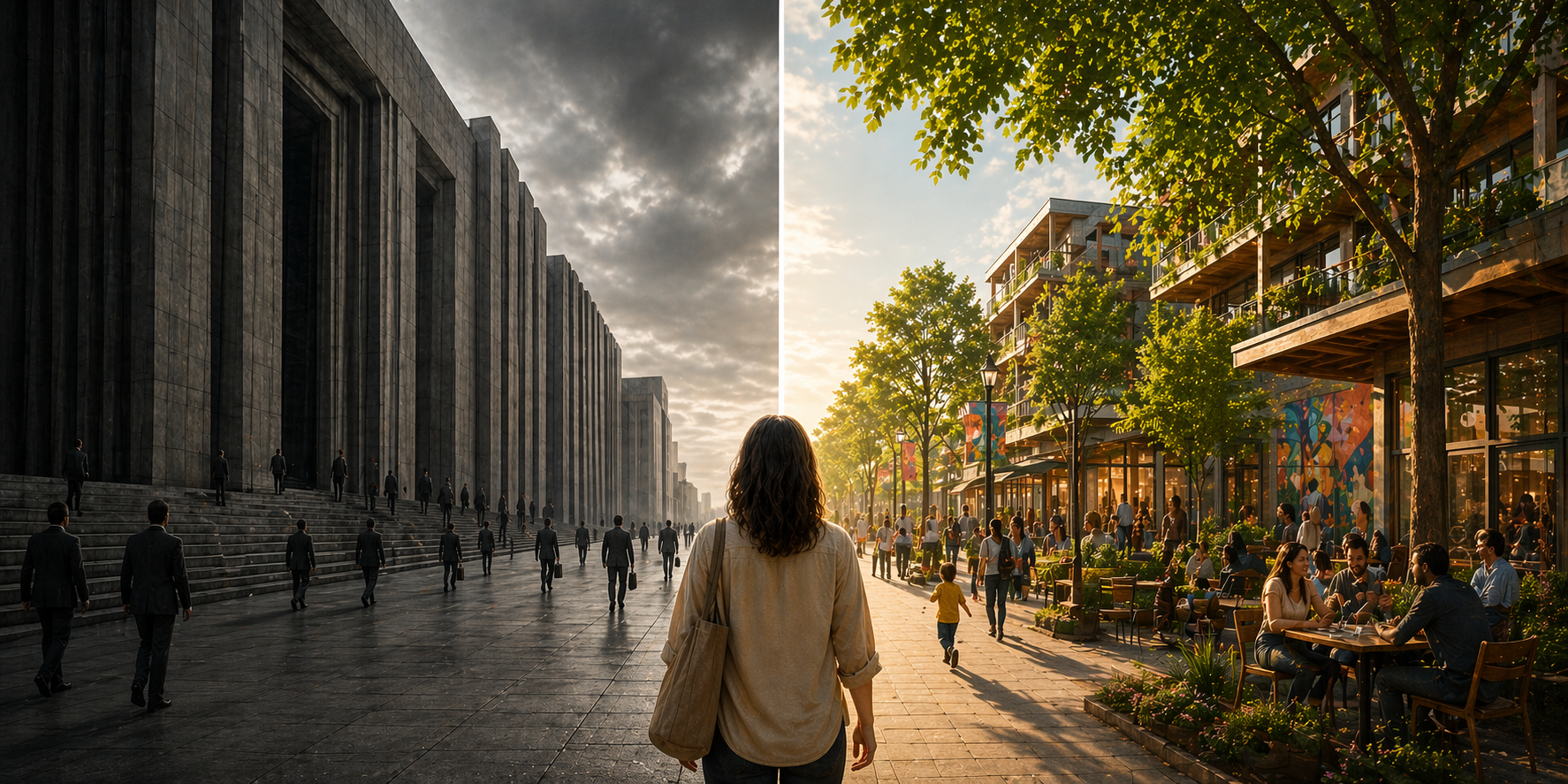
You can escape art, but you can’t escape architecture. You can turn off a song. You can look away from a painting. But you can’t walk away from architecture; you’re already living inside it.
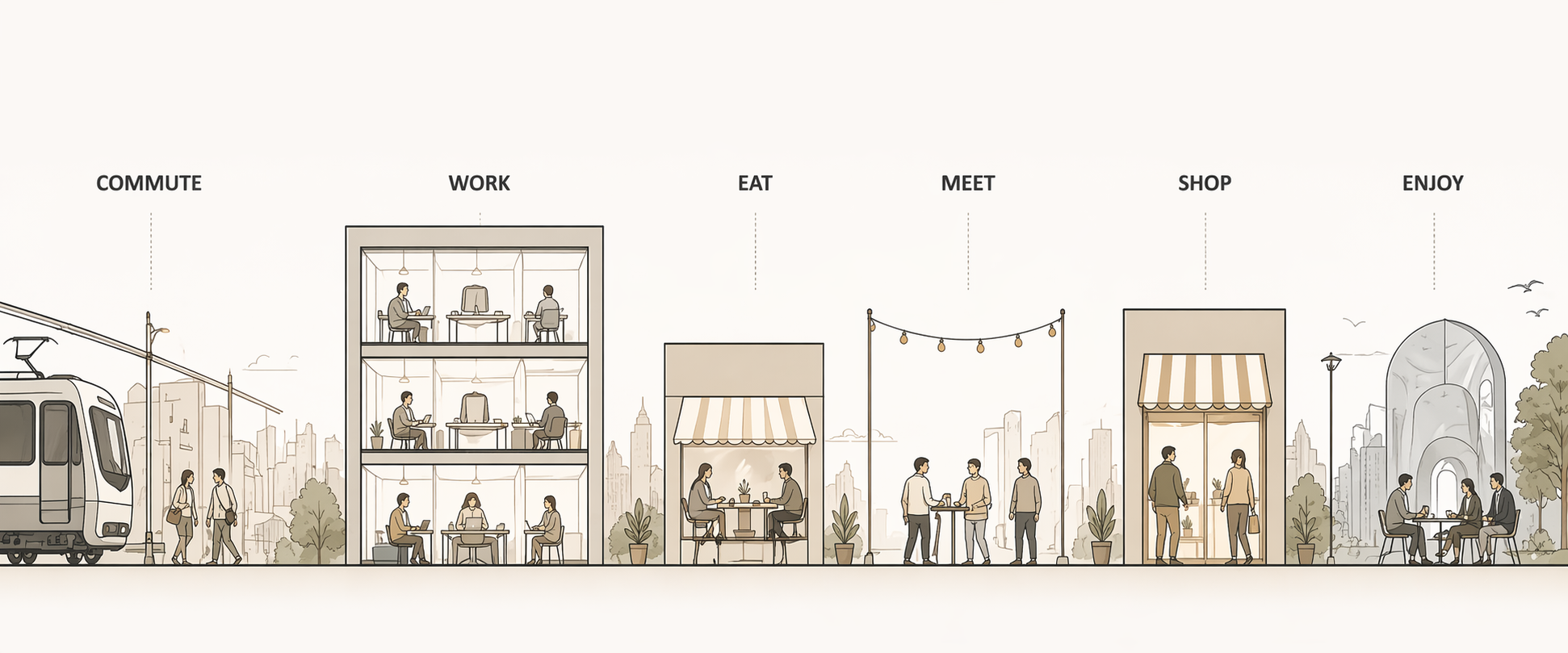
There is a flux of movement throughout our typical days. We commute, go to work, eat out, meet with friends, buy groceries, or go to concerts etc. Even the ‘same old’ unfolds in different environments. A lunch break on a sunlit bench feels different than eating on your desk.
Our everyday environments sculpt our days quietly, constantly.
Pause for a moment. Look around you.
Are you sitting, standing, or laying down?
Is the light around you natural, through a window — or is it buzzing down from fluorescent tubes?
What colors dominate your space?
Is the air fresh, or slightly stale?
Tilt your head up. What do you see — a high ceiling, exposed vents, or a blank drop ceiling? Maybe you’re outside, surrounded by trees, breeze, and sky.
Now, more importantly —
How does it feel to be here?
Do you feel calm? Focused? Energized?
Or do the walls feel like they’re closing in — a quiet pressure you can’t name but can sense?
Every detail around you is speaking to your body, whether you realize it or not.
Think back:
Have you ever stepped into a house, a cafe, a museum, or even passed by a building and felt something shift?
Maybe your chest opened. Maybe your eyes lit up. Maybe you just felt good for no logical reason.
On the other side, have you ever walked into a space and instantly sensed something was off? Like the air felt heavy, or the layout confused you, or the colors just didn’t sit right? Maybe it even made you say, “I don’t want to be here again”?
That’s not random. That’s design or the absence of it.
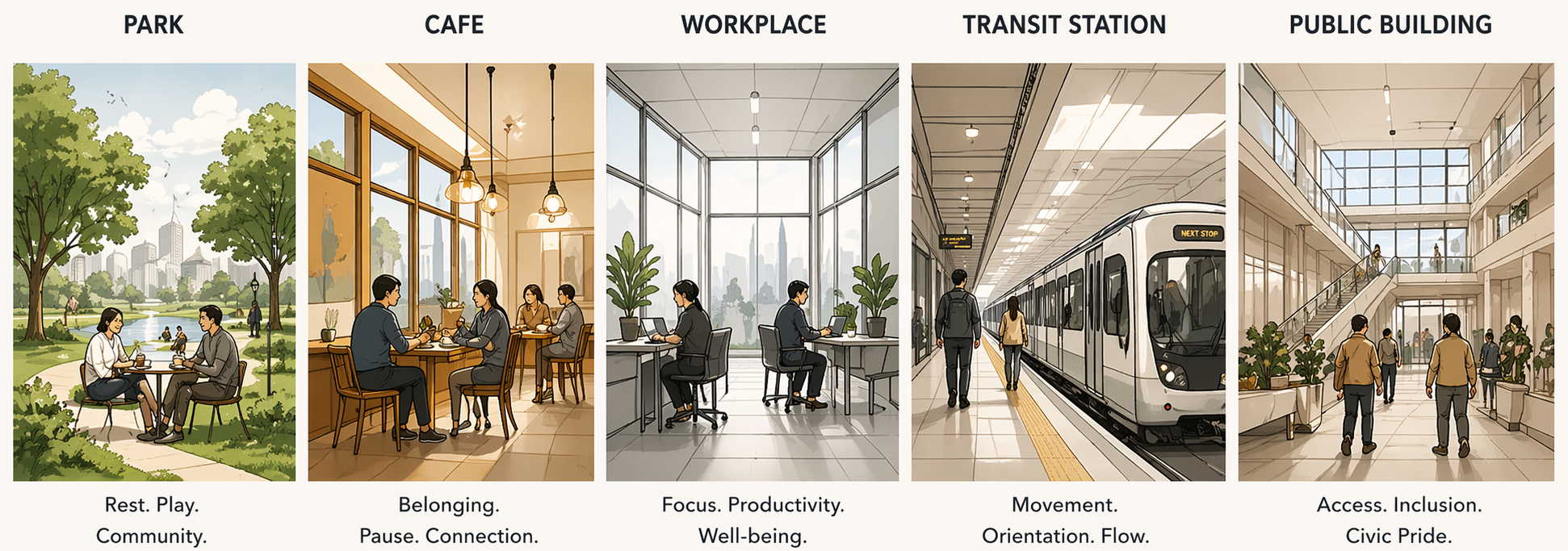
Every space we enter — a train station, a lunchroom, a park bench, a corner store — is shaping our experience through its lighting, layout, materials, acoustics, colors… it’s sculpting how we feel, how we move, even how we think. These choices go deeper than just aesthetics. It’s physiological. Each of these design elements is a world of its own. But when they’re curated with intention and with empathy; they become powerful tools.
Within the same framework, architecture has always been a tool of power on a larger scale. Throughout history, politicians have used this tool to control, intimidate and impress masses. If we take brutalist or fascist-era government buildings or districts as an example, you feel instantly out of place – as if the space itself is rejecting you. They typically have a grandiose design and with their massive scale, harsh materials, towering doors and entrances are meant to make individuals feel small, unwelcomed, and unimportant. This is specifically designed as a statement: power towers above people.
On the contrary, you would feel more at ease with human-centric design. These types of places are focused on empathy, usability and emotional connection to enhance our well-being whether it’s a small cafe, institution building or workplace. For instance, a well designed neighborhood park with shaded play areas, tables for small or larger gatherings and inclusive signage makes it a shared anchor for community life. Imagine a train station with tactile floor paths, small shops, visual maps, and local artists’ mural displays. This would definitely serve more than the ‘average’ commute.
It's not always what looks good, it's about what feels right and honors real life.
Some spaces are meant to dominate, others to soothe or connect. Some.. are just not designed at all. Regardless, we feel it all.
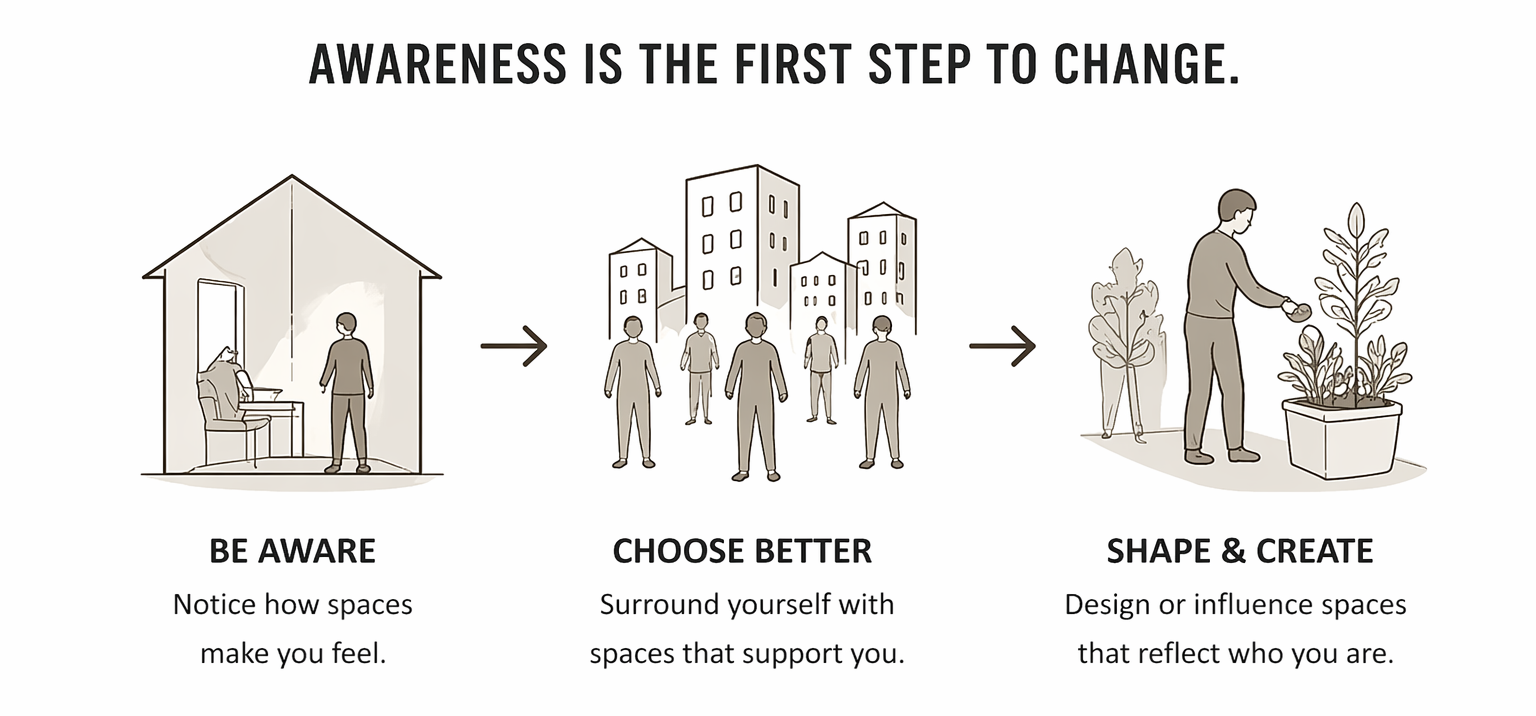
In a greater sense, we are byproducts of our environments. We often treat architecture as background — but it’s actually shaping who we are. It’s crucial as human beings to be aware of the effects of our everyday spaces whether it’s our room, home, workplace, or the communal areas that we are part of. With this elevated knowledge, we can start by placing ourselves in better-designed spaces — and when possible, by shaping them to reflect who we are.
Now the question is:
If we can’t escape architecture, shouldn’t we ask ourselves if we are celebrated by the spaces we build, or crushed by them?
News